
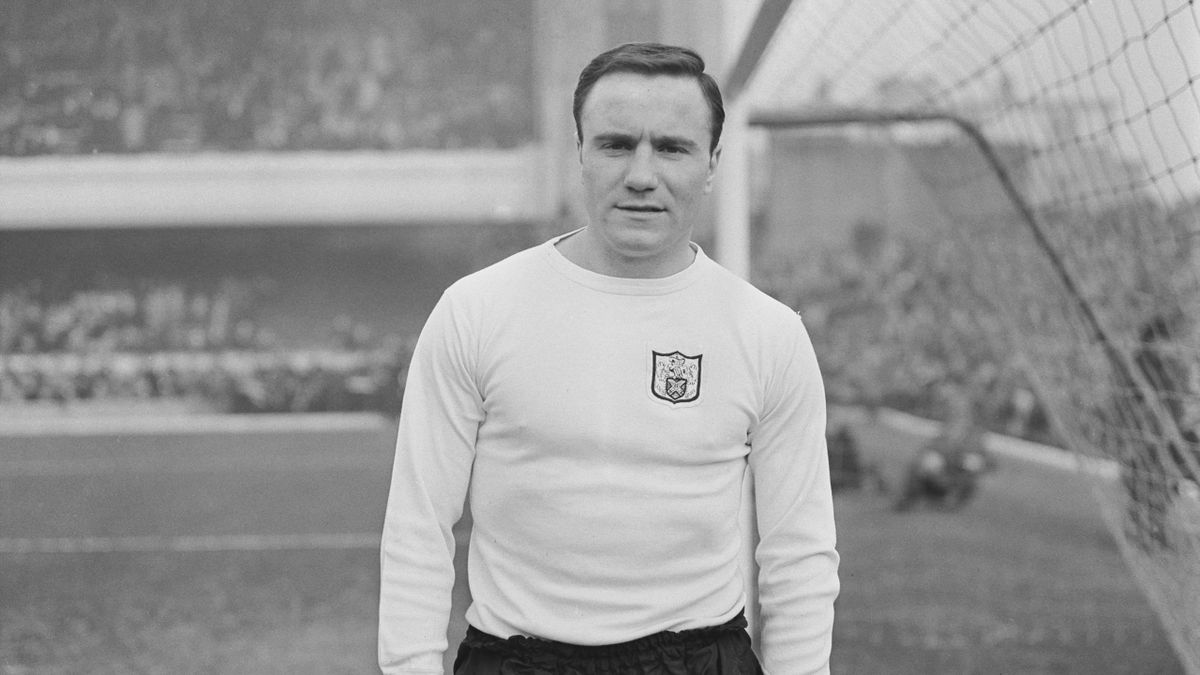
EXCLUSIVE INTERVIEW with ex-England right-back George Cohen MBE
Written by Jed Vine
I was given the chance to interview Fulham legend and World Cup winner George Cohen MBE. George played 459 games at right-back for Fulham, and played 37 games for England, including being vice-captain in the 1966 World Cup Final. England triumphed 4-2 over West Germany that day, meaning George was a crucial part of the only ever England team to lift the fabled ‘Jules Rimet’ trophy.
George scored 6 goals, spending his entire playing career at Fulham, before coaching the club’s youth team and England U23s, as well as managing Tonbridge.
This is my interview with a true footballing icon.
What was your journey up to your Fulham debut?
Embed from Getty ImagesI left school after my O-levels, when I was 16. I was asked to go to Fulham as part of the ground staff. You can’t sign a professional contract until you are 17, and that’s only if you are good enough. I had all the menial jobs, like boot cleaning, sweeping the terraces… I can’t explain why they do it, it must just have been to do with discipline. In any case, I had to do that, as well as a few other young lads, and we were all hoping to become professional footballers. Then, if you were good enough, you were signed at 17, and that’s where I started.
How did it feel scoring your first professional goal against Brighton?
Obviously, I scored my first goal in the South East Counties [youth league], and it took a rather long time to get my first professional one as a right full-back! It was marvellous; I mean, when you score a goal in the first team in front of 20,000 people, you’re always going to be elated.
I’m sure you’re asked this all the time, but could you describe the moment when you were first called up to play for England?
Embed from Getty ImagesGeorge Cohen playing in the 1966 World Cup Final at Wembley Stadium
Well, it was stunning, to be frank. I knew that I was going to be considered, but I never thought I was going to be given the captain’s place! I took it from Jimmy Armfield when he got injured, and then I had to retire a few years later myself.
On your 30th cap, England won the World Cup. What do you remember most about when you got your hands on the Jules Rimet trophy?
Embed from Getty Images(From L to R) Jack Charlton, Nobby Stiles, Gordon Banks (behind), Alan Ball, Martin Peters, Geoff Hurst, Bobby Moore, who holds the Jules Rimet trophy, Ray Wilson, George Cohen and Bobby Charlton
It was quite fantastic. It really is the epitome, the best feeling you could ever hope to get as a professional footballer. We’d won it ahead of some of the top teams in the world at the time. The Germans were an incredibly strong side, and we played them to a standstill in the end. The extra-time we had to play showed that we were definitely the fitter side. The Germans didn’t have any complaints at all, as far as I can remember. Very gracious in defeat, and we’ve never really seen anything otherwise.
Could you pick out some of the best players you have shared the pitch with?
One of the greatest players I’ve ever played with was Johnny Haynes. I don’t know why people don’t ever include him in their best teams of all time; he was so obviously one of the best players you could ever, ever play with. His passing and his knowledge of the game was absolutely outstanding.
The World Cup squad had some very good players in. We all know their names. People don’t recognise quite how good Nobby Stiles was. He was a great marker, and you could see the sense in him teaming up with Bobby Charlton; Bobby was one of the greatest players you could ever find. You could see that their partnership together made Manchester United great, and they gave a great contribution to the England team in the World Cup as well.
Embed from Getty ImagesGeorge Best scores a header, having out-jumped George Cohen
Aside from the England squad, there was George Best, of course. Denis Law was a magnificent player. People like him might go out of fashion as time goes on, but you’re not going to find better players than them. Then you had Pelé, [Alfredo] Di Stéfano, both of whom were incredible players that I got the chance to play against, and you really could see how good they were.
Embed from Getty ImagesPelé out jumps the Portugal defence at Goodison Park during the 1966 World Cup.
There were so many great players in my generation, and they were mostly playing for very little money compared to what it is today. Players probably signed on for £7 a week as professionals. It never really reached above £100 a week in my day. Johnny Haynes; he was the first £100 a week footballer. You’ve got to look back even further than that, where players in the North would work in the morning, going down the mines! They’d do a shift down the mines to earn money, and then, if they could, they would play professional football in the afternoon! A lot of people don’t know that. It must have been a hell of a job to do, but they did it! Today, the money is unbelievable, quite fantastic.
After your playing career, you coached at Fulham and for England U23s. What sort of changes did you see in the sport?
The U23s were always good, because you knew that you were playing with people that were also in the first team! It was good to do that, because you had the support of other professional players. For me, it was hard work to get into that side, as there were so many good players around, as there are today. It was very difficult to get an U23 cap when I played, and I suppose it became easier. In my day, if you had got into the U23 side, you knew you were good, and you had a chance of getting into the full team. That doesn’t mean quite so much now.
Were there any major challenges transitioning from player to coach?
Embed from Getty ImagesGeorge Cohen waits by the goalpost before a corner kick during Fulham v Manchester Utd at Craven Cottage
I was never actually qualified to coach… though to be honest, what qualifications do you really need? I played 459 games in Fulham’s first team and 37 for England before I got injured. As you play, you realise how wonderful it all is, and I was learning all the time. This is what some young people don’t understand – once you get to the first team, you have to constantly prove that you’re good enough to be there, and you have to improve all the time.
What was it like seeing a statue of yourself be unveiled outside [Fulham’s stadium] Craven Cottage?
Embed from Getty ImagesThe only word is surreal. I saw the cover come off it, and I just exclaimed, ‘Good grief!’. I mean, to think that they had made a statue; I find it absolutely wonderful that they even thought I was worthy of it. Especially as it was alongside Johnny Haynes, the greatest name in Fulham’s history. As far as football is concerned, he was outstanding. And to be alongside him, it was rather unbelievable. It was great to think that not only the club, but the supporters had wanted to put a statue of me there. When I do walk past it, I never know if I should look at it or just ignore it! Mind you, I’ve put a cap out there, in front of my statue, and no one’s ever put a penny in it! It’s rather magnificent. It’s on the riverside, so people that are sailing past on boats can see it as well. The only trouble is, being on the river, it has to get cleaned quite often because of the seagulls!
Do you have any advice for young people who are joining academies now?
Yes. Work like the devil. It’s a very hard journey, people are very fit today and there’s a really good skill level. Your fitness level is the most important thing, though. Being fit will keep you going through the injuries and will make you get over those injuries quicker. I loved training, I absolutely loved getting fit. What was always prominent in my mind was this: if you’re not good enough, you won’t be in the side, and playing football is what you’re there for.
What are the main qualities you need to become a successful football player?
Embed from Getty ImagesGeorge Cohen shakes the hand of Queen Elizabeth II before the opening game of the 1966 World Cup
You’ve got to have real strength of mind, a real desire. You’ve got to want to do it. There are hundreds of people who are waiting, wishing to step in your place, so you’ve got to be fit, you’ve got to walk on the pitch with a superior state of mind to your opponent. I always made sure that the people I was playing against really knew that I was there. You’ve got to be number one when you step on that pitch. When you are a professional footballer, you’re not just trying to do the best for yourself, you’re doing the best for the team and for the club.
Do you watch much football at the moment?
Embed from Getty ImagesGeorge Cohen with legendary England goalkeeper Gordon Banks at the new Wembley Stadium.
Yes, absolutely. I go to every Fulham home game, although I don’t know when the next one with fans will be thanks to the current situation. I’m on Fulham’s hospitality team, so I meet and greet the away team’s directors in the Cottage next to the ground; a lot of people know me around there, of course! I get to meet a lot of interesting people; not necessarily people who are actually interested in football, but people who are watching it for the first time too. Our chairman [Shahid Khan] obviously came from American Football, which is completely different. There’s a lot of people like him, who have a lot of money, who buy these teams. I’m not sure how he feels about what’s going on at the moment, as all the clubs are losing money. You couldn’t have foreseen it at all, this pandemic.
Are there any right-backs in the modern game who have a similar style of playing to you?
Embed from Getty ImagesAlly MacLeod of Blackburn Rovers is tackled by George Cohen
Most of them do seem to follow the style of playing that I helped to perpetrate. Not just me, there were a couple of others; Jimmy Armfield was good at it, and there were a few Chelsea full-backs. A lot of people wanted to play like that, but they weren’t quick enough, agile enough or even knowing enough. Football’s a very difficult game to play, and if you’re not good at it, forget it.
There’s a big focus on racism in sport at the moment. Did you ever witness any particular incidents when you were playing?
Being a black player brings other things into the game that it really shouldn’t. Idiots, quite frankly, would abuse these players, and I just never understood it. I really hope that people get over it, and that they are allowed to play football free from abuse, and people can appreciate the fact that they are good players. I never experienced much myself. ‘Cohen’ is a very Jewish name, even though I’m not of the faith, but I was never abused in any way at all.
Were there any downsides to having a career in football?
Embed from Getty ImagesGeorge Cohen and ex-England manager Fabio Capello shake hands after the unveiling of the sculpture of Sir Alf Ramsey beside the Jules Rimet trophy.
Yes, I guess there are. Firstly, it comes to an end rather quickly, and you’ve got to be able to work to earn a living for the rest of your life. I coached the Fulham youth team for a couple of years, but I was asked by a businessman to come and work for his building company, which I did. I preferred doing that because it was something I knew I could do, rather than wait for someone to recognise me and give me a bigger position in football. So, I became a land buyer! They taught me the ins and outs of building and planning. I was very fortunate because my education had involved a lot of drawing, and I could understand the drawings that the architects asked me to study. The property market was always up and down. Eventually, Fulham asked me to come back and work with them, so I got back into football that way. Things worked out alright for me; I never lost any money, which was fantastic!
So, I’m employed by Fulham now, but there are still some downsides. I’m 81 now, and there are some games that don’t start till seven o’clock in the evening, and I live about 60 miles from Fulham, so getting home late is quite a big problem for me now. It’s very wearing; I’m there for several hours, talking to everybody, and it isn’t always easy to talk to people who sometimes don’t know anything about football! I still love the job, though, and I’m well respected down there. I’m asked if England are ever going to win the World Cup again, and I always reply, ‘not for a while’. It doesn’t seem like we’re going to win one for a long time!
What would you say were the biggest highlights of your career?
Embed from Getty ImagesFulham team portrait at the start of the 1965/66 season. Includes George Cohen (back row, far left), Bobby Robson (back row, far right) and Johnny Haynes (fourth from left, middle row)
Making my first appearance for the senior team at Fulham. I was 16, and I had to wait about nine months before I got another one! But then I stayed in the first team until I got injured years and years later. I didn’t miss a game too often. My knee injury, which eventually forced me to get a new knee, cost me dearly. It was a terrible injury at the age of around 29. It was really sad, because that was when I was playing my best football. At that age, you seem to know what’s happening on the pitch instinctively. When the ball is in the opposing penalty area, you know which way it’s coming out, for example, so I could adjust my position accordingly. You get a great understanding of the game, and if you can read the game early, it saves you a huge amount of work. If you’re not clever enough, you’ll end up doing far more running!
Embed from Getty ImagesThank you so much to true legend, and idol of so many people, George Cohen. You helped fashion the game I love, and you were such a gracious and patient person. I can’t thank you enough for sharing your incredible experiences with me. Special thanks also to Chris Cohen for helping set the whole thing up. My best wishes to you both.
Written by Jed Vine


