
EXCLUSIVE INTERVIEW
Written by Jed Vine
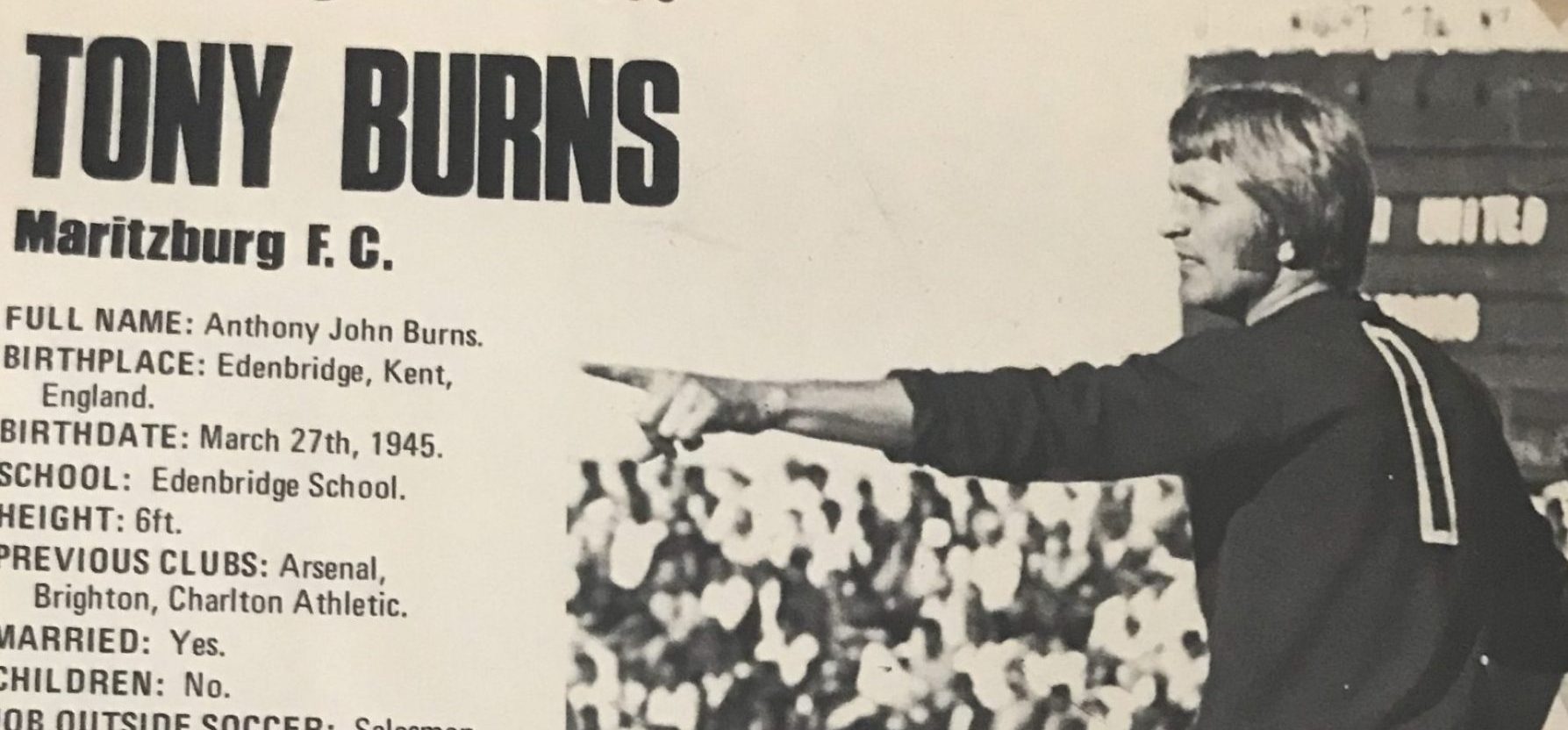
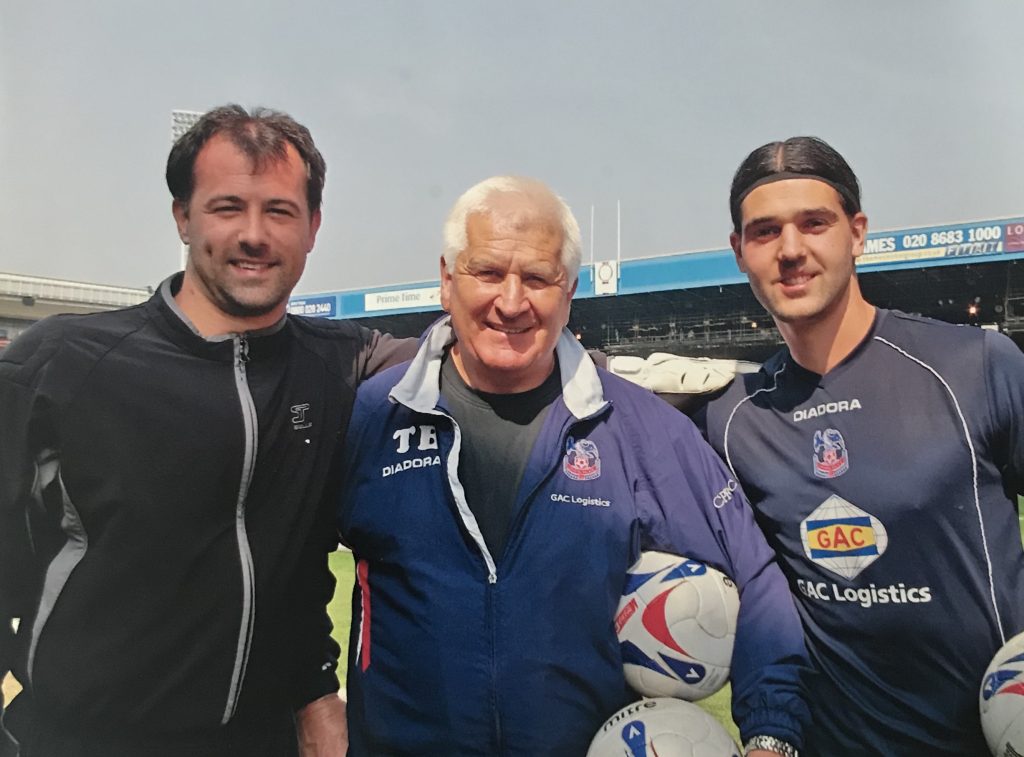
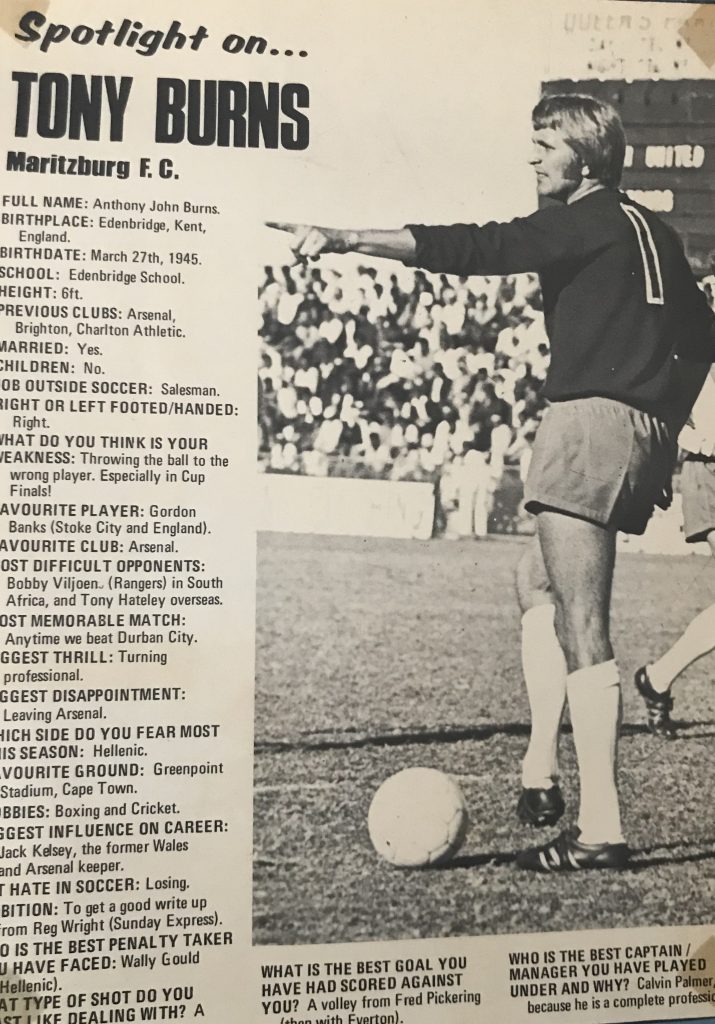
I was given the incredible opportunity to interview former Arsenal goalkeeper Tony Burns. He made his professional debut for Arsenal in 1964, before going on to play for clubs including Brighton, Charlton and Crystal Palace.
He even played in South Africa, a part of the first ever white football team to play in Soweto, and spent time in America, playing against the likes of Franz Beckenbauer, George Best and even the legendary Pelé.
Discover the story of one of football’s greats.
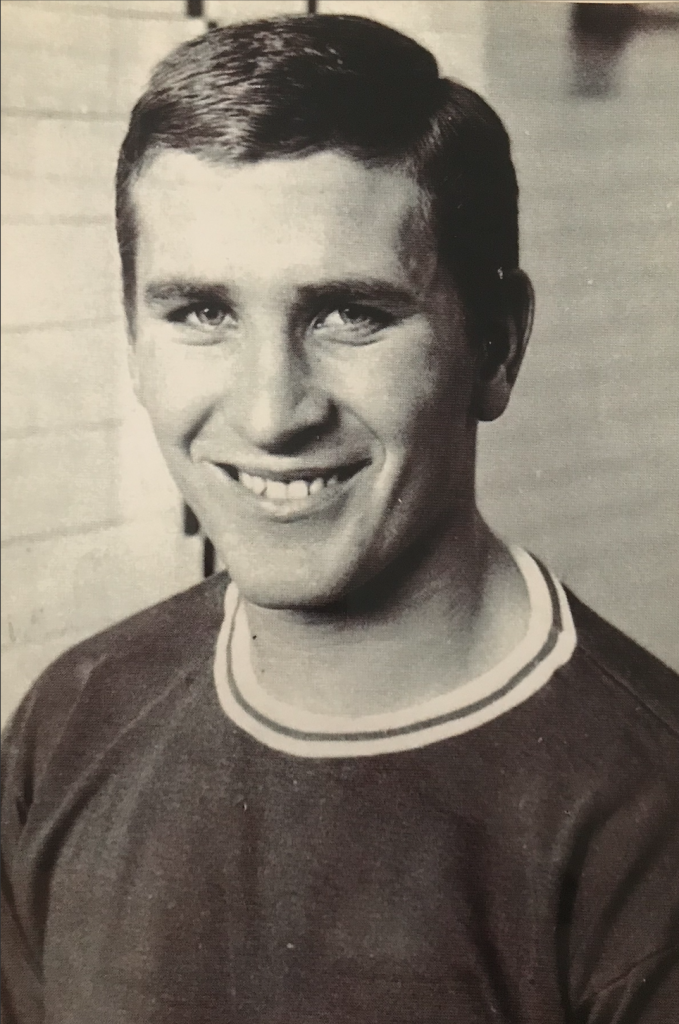
Would you like to talk me through your career?
It was quite a long career! I started at Tonbridge when I was 18, and then I went to Manchester United, Everton and Arsenal [youth academies] in a week. I’d only played two games for Tonbridge, and my third game was against Arsenal’s first team on the actual Arsenal pitch.
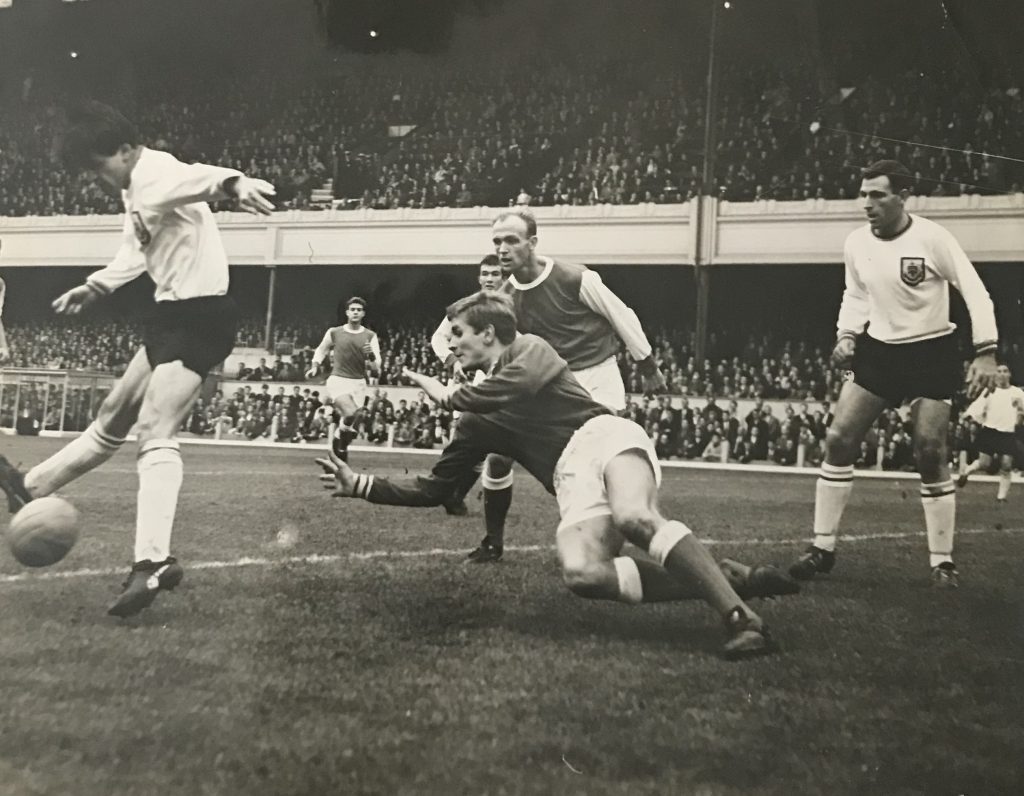
I came off the pitch at Arsenal, and they offered me a contract! Really, it was for someone under the age of 18, but I was coming on 19. I shouldn’t have been playing for the youth team. The manager at Tonbridge told me to forge my passport, so I did! I played 12 games, and there was a tour that went to Amsterdam. On the tour, they found out about the passport situation; a pretty desperate thing to be doing at that stage of your career, but the boys at Arsenal actually quite liked it!
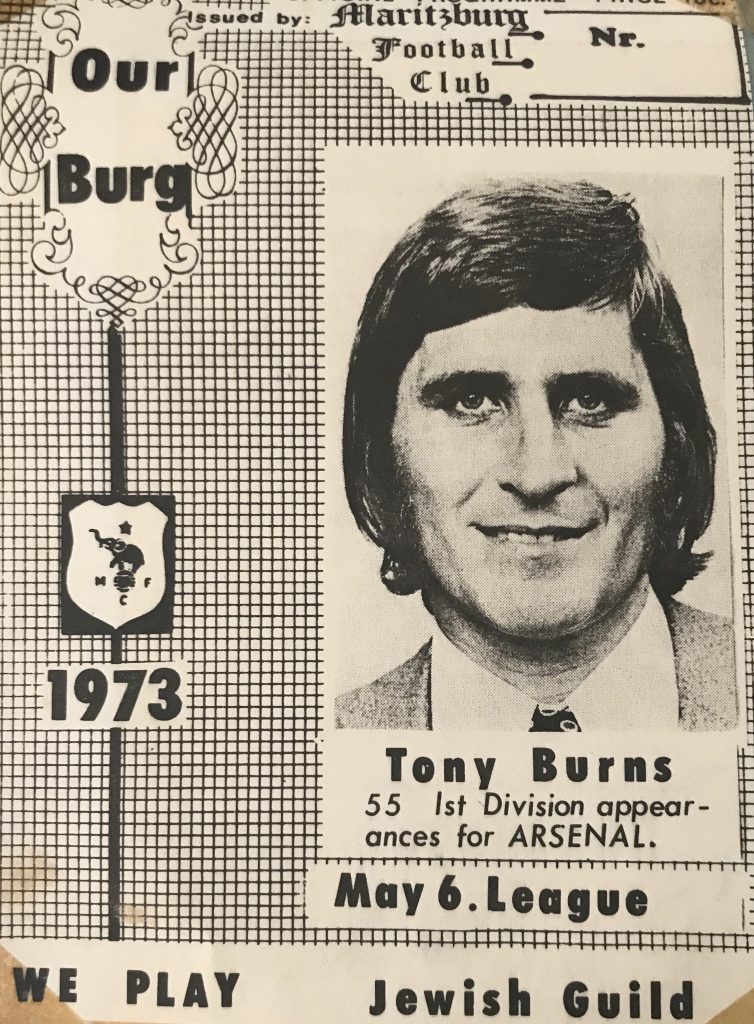
Billy Wright was the manager – the first ever England international to have 100 caps – and a year later, I was in the first team at 19. I was a boy who grew up in the countryside, and my father died early. I was a really shy person, and, all of a sudden, I was playing in front of 60,00 people, with Billy Wright as the manager! I used to just sit there and think, “I don’t know what I’m doing here, or if I even should be here”.
Anyway, I played 26 games on the trot, and I did alright! It set me up for life really. We used to go away to the best hotels – I’d never been away or anything before that. It was a long time ago, remember – back in 1963 – so I was really impressed by everywhere I went. My mother came to a game, and she couldn’t believe it! There were crowds of kids surrounding me after every game, and I don’t know how I took it in my stride so easily. I look back sometimes and don’t know how I handled it. I think it was the people around me.
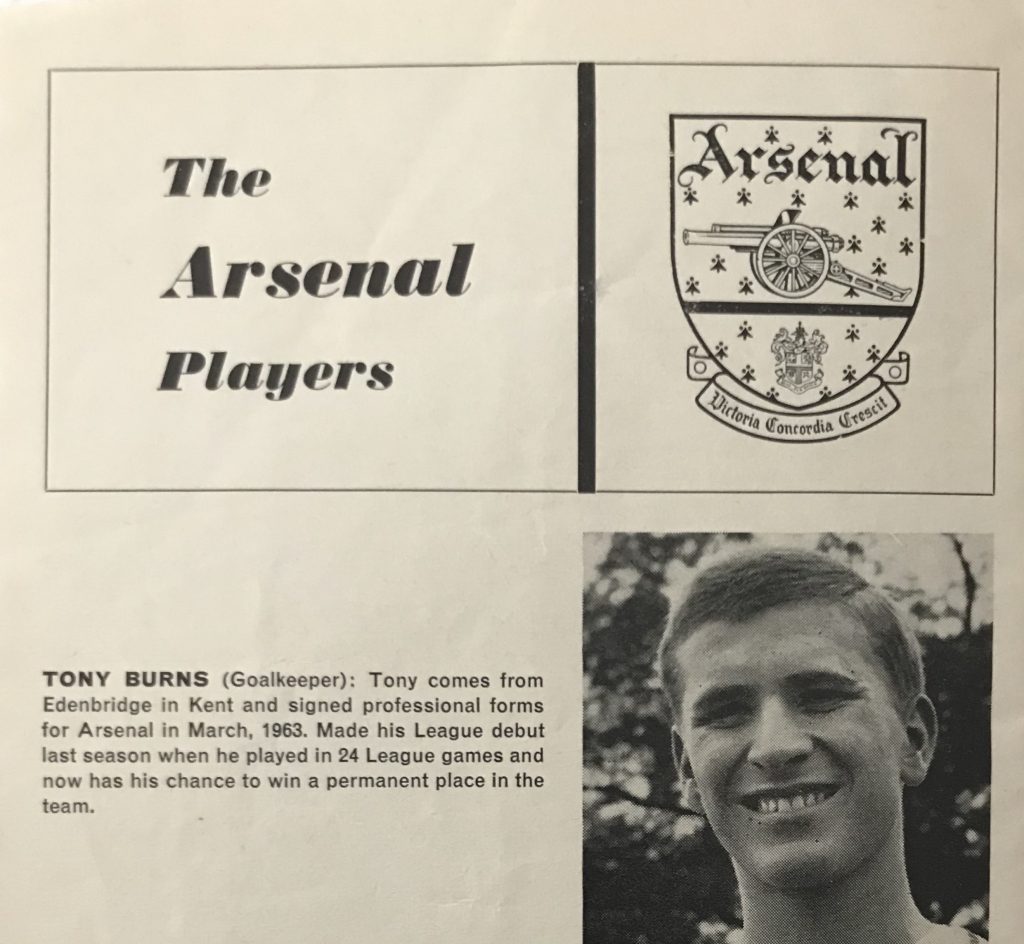
I went to Brighton in the summer of ’66, just before the world cup final. I think I went for about £10,000. I quite enjoyed it; stayed there for four years.
What was it like being transferred in your time? Because I know that it’s changed so much in the market nowadays, with so much revolving around agents, making it quite a complicated process…
No agents. You’re talking about a great club like Arsenal. I didn’t do any of the negotiating, it was all set up for me. They gave me some money, which I’d never ever had before, so it was completely different [to nowadays]. I mean, I’ve just had 20 years at Millwall, with agents coming in every day, talking to young players, money flying around everywhere – it wasn’t about the money [when I played]. It would’ve been handy if it had been!
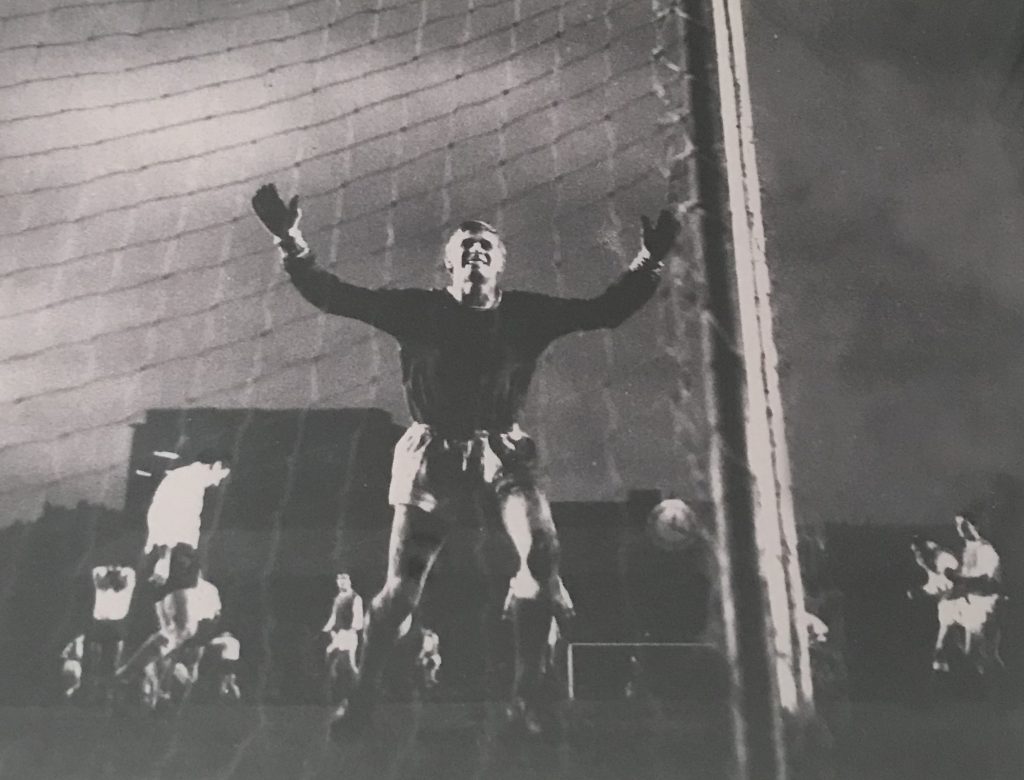
Then I went to Charlton, and I played the last 7 games of that season when they were going for promotion. We won every game – might have drawn one – and missed promotion by one point. So, I went to see the manager; I’d had an outstanding time when I played; and he said – “Yep, we’re very pleased with you… we want to offer you a 3-year deal, and we’re gonna give you £5 a week extra”. I sat there just looking at him, his name was Theo Foley, and I said “£5 a week?”. He said, “you don’t seem very happy with that.” I wasn’t.
“But I’ll tell you what I will do. If you give me a free transfer, I’ll go to South Africa”. They said there was no way I’d go there, but I said that was the deal. “I’ll play in South Africa, so I won’t embarrass you by playing against you”. They didn’t know I’d already spoken to the agents from South Africa before I went into that meeting. So, they gave me a free, and the next day I signed for the club in South Africa.
How different was the football in South Africa compared to when you were playing in England?
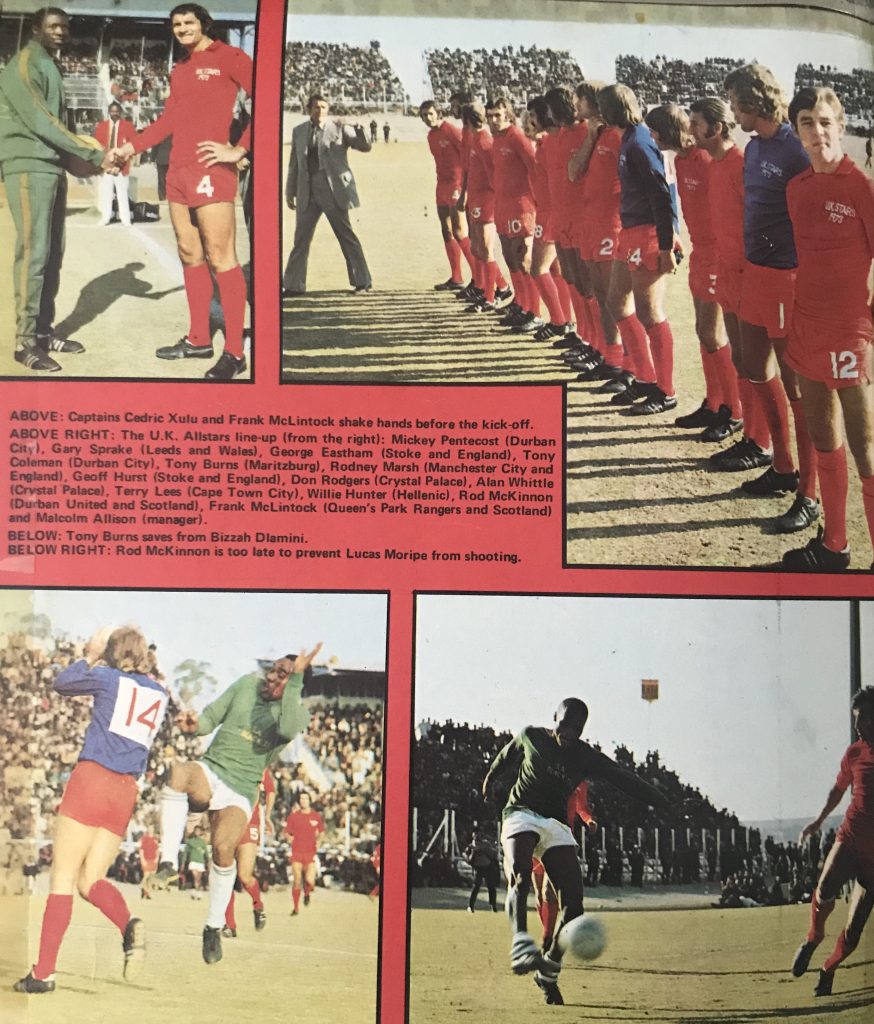
We used to train at night, it was so hot there. First of all, I went there with an injury; I’d played two games for Tonbridge before I went [to Durban United] just to get them out of trouble, and somebody had split my knee open. It meant I had to go into hospital with an infection, and they said you’ve got to stay here for ten days. I said, “I’ve got to go to South Africa, I’ve signed the contract!” So, I got myself out of the hospital and went.
When I stepped off the plane, I couldn’t believe it. It was so hot. I’d already travelled there with Arsenal and had always fancied going back. Really, I was outstanding for two years out there, I really was. I had such a good time.
I played in the first white team to play in Soweto. When we went there, the whole ground was surrounded by black men holding these Alsatian dogs. The referee came to us before the match, and he told us not to celebrate too much when you score. It was a very scary experience. There was nothing like it; the dogs were barking, you couldn’t hear a thing that was going on, it was crazy. But we got in there, beat them 3-2, made a fuss of them and got out of there straight away. It was really dangerous. Your highlights are when you’re playing well, and I did feel good in South Africa.
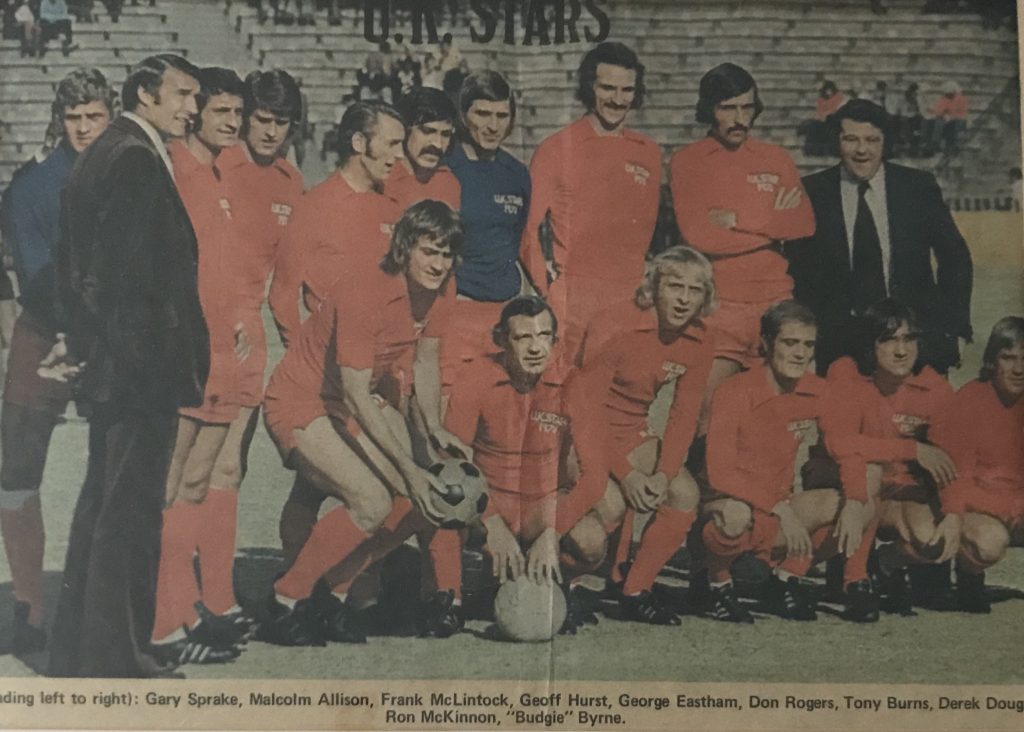
I played in the team selected by Malcolm Allison, the English All-Stars team, with everybody; Geoff Hurst, for example. And through that, Allison said, “Write to me when your contract finishes, and you can come to Crystal Palace.” They gave me a ticket to fly back at the end of my contract, and I went to see him. He offered me a two-year deal straight away, and I played for Crystal Palace.
I played nearly 100 games for Palace. While I was with Malcolm, we went to Memphis [Rogues] in America, and had a year there. I was a part of their first ever season! Came back, played for Plymouth [Argyle]. I managed Tonbridge three times, managed Gravesend, and that’s why I’ve got white hair!
How was being a part of Memphis Rogues’ first ever team?
When we went there, they’d never seen football before – or ‘soccer’. They’d never even thought about football before. We went there, all English players. They used to play music while we were playing and trying to concentrate! There was a man on the organ, playing the music really loudly! When we were attacking, the music got quicker, and I’m in goal at the other end thinking “Oh God!” When they attacked us, it went “Dun, dun, dun!” They had the girls, the cheerleaders… I went to the manager and said “you gotta stop the music, its driving me mad!” Everywhere we went, that’s just what they did in America. They used to go “WOW” when I kicked a goal-kick!
It was really interesting in America. It’s obviously still changing now, but that’s when it really started over there. I played against Pelé, Beckenbauer… you know Pelé, right? Our manager was Malcolm Allison, then it was Eddie McCreadie. It was a crazy world then, an era of all those well-known players. George Best, Bobby Moore was out there; they all went just to earn some money! None of them had ever made any money from playing, and nor had I. I earned nothing from football, until I started coaching – I had my own painting and decorating business. It was only when I went coaching, and Dennis Wise put me on a decent wage, and I stayed at Millwall for 20 years.
Who do you support now?
I’m still an Arsenal man.
Would it be possible for you to pinpoint some highlights from your career?
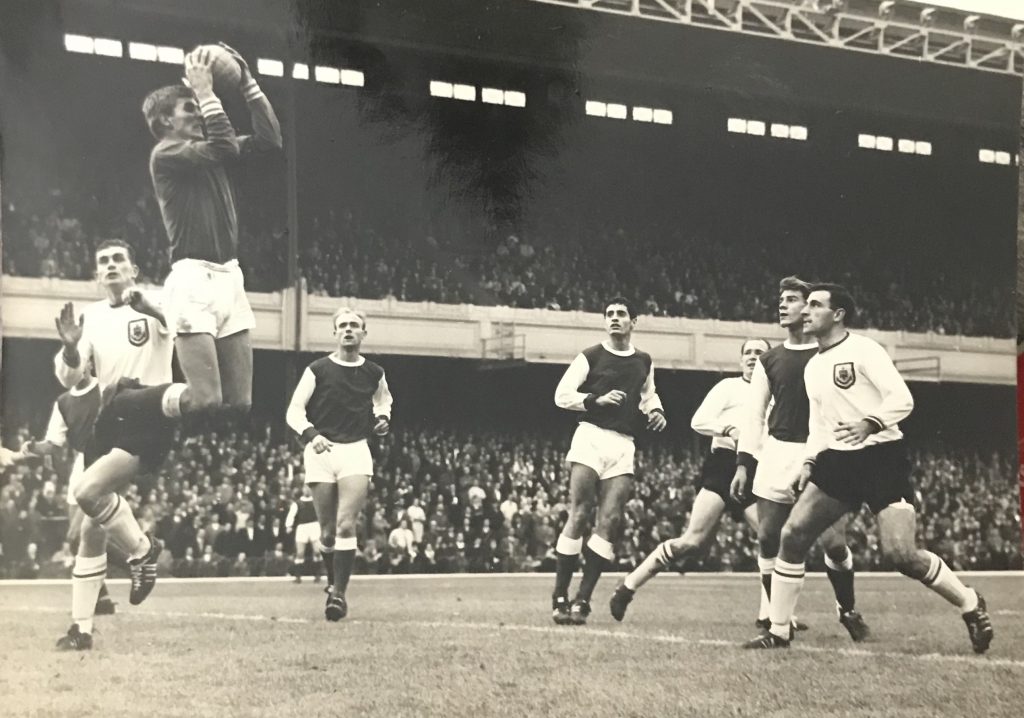
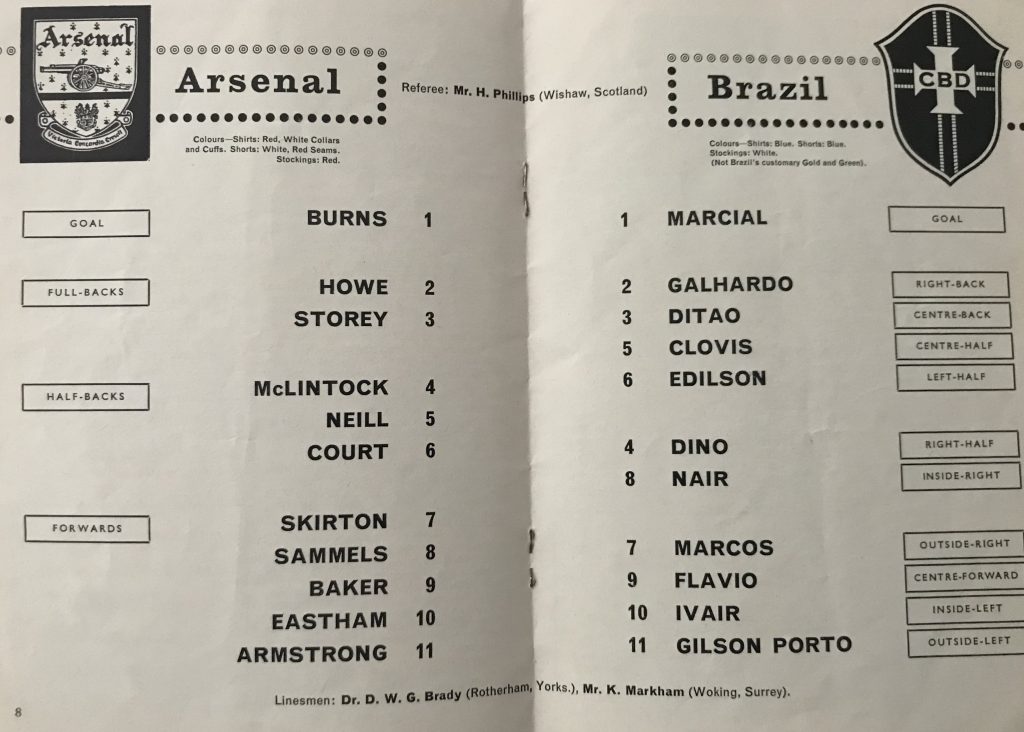
The highlight was signing for Arsenal, I must admit. When I ran out there for the first time, against Burnley for my debut, in front of about 50,000, I just couldn’t believe the world I was in. The wages, I was on £15 a week. I think it was £5 extra for a win, and that was it. I sent all my money home to my mother for the first six months. We used to live on a council estate, and I bought all the carpets, gas fire, changed the house around for her. There was no big money, though, nothing to really treat yourself with.
Were there many people who had other jobs as well as football?
No, not really. That only happened to me when I went to South Africa. First year, all the lads were on the beach, because we trained at night-time. It was so boring. When I got married, my wife came out and worked, and I used to work in the day-time and train in the night. It helped us pay for our first house. If they’d used their heads, they could’ve got a bit extra for themselves too. It was a real battle, just earning ordinary money like ordinary people.
It all changed with Johnny Haynes, who I played against in South Africa. He was the England captain, and he demanded that the players started to earn £100 a week. That was back in the late ‘60s. They didn’t earn anything when England won the World Cup in ’66. In the ‘70s it started to build up a bit. But nowadays, it’s quite ridiculous what some of them get.
How was the transition, going from a player to a manager?
It’s much harder now, with agents involved, but they’re the ones that get the guys the money which we never had! Footballers now, honestly, they live in another world… Crazy money for 10 years, if you’re lucky, and then, what do you do? If you sign a four-year deal at a Premier League club, you should be a millionaire. I used to pull up to training in my Citroën, they used to take the mick out of it, with their sports cars. I used to think, what’re you gonna do later, when you need to bring in two grand a week? They don’t see it. You gotta learn how to work, and to pay your mortgage at the end of the month.
When you were managing and coaching, it was obviously a very different world. Did you see that transition happen very blatantly at Millwall and Palace?
Absolutely. They’re not careful with money. Some are, but the only thing they really cared about was their fitness, which has improved over the years. They get everything done for them… they walk in, dinner’s there. You’d be surprised, but the way they treat their dinner was unbelievable sometimes. Sit in a nice hotel, twelve players round a table; at the end of it, it looks like there’s been a war in there. Knives, forks all over the place, bread rolls on the floor. There are some good ones though.
Were there any players that you really enjoyed playing with?
There are so many. Where do you start? Johnny Haynes in South Africa, George Best. I remember at Arsenal, we went and played in Italy. John Charles, Welsh international, played for Juventus. He came to our hotel, and we were having lunch. There must’ve been 2000 people outside. When he came out, there were so many people chanting, it was incredible. I idolised these people. He put another 10,000 on the gate himself. A really nice person, too, just like Billy Wright was.
Recent players? Well one of my best mates, who died the other year, was Ray Wilkins. I knew him so well; he was at Millwall with us. People like that, you don’t realise just how good they were, and what a great life he had. All the big names were good people; Geoff Hurst, who was on the tour with us, Martin Peters…
In terms of attackers that you’ve faced, who would you say was the most frightening? Was it Pelé?
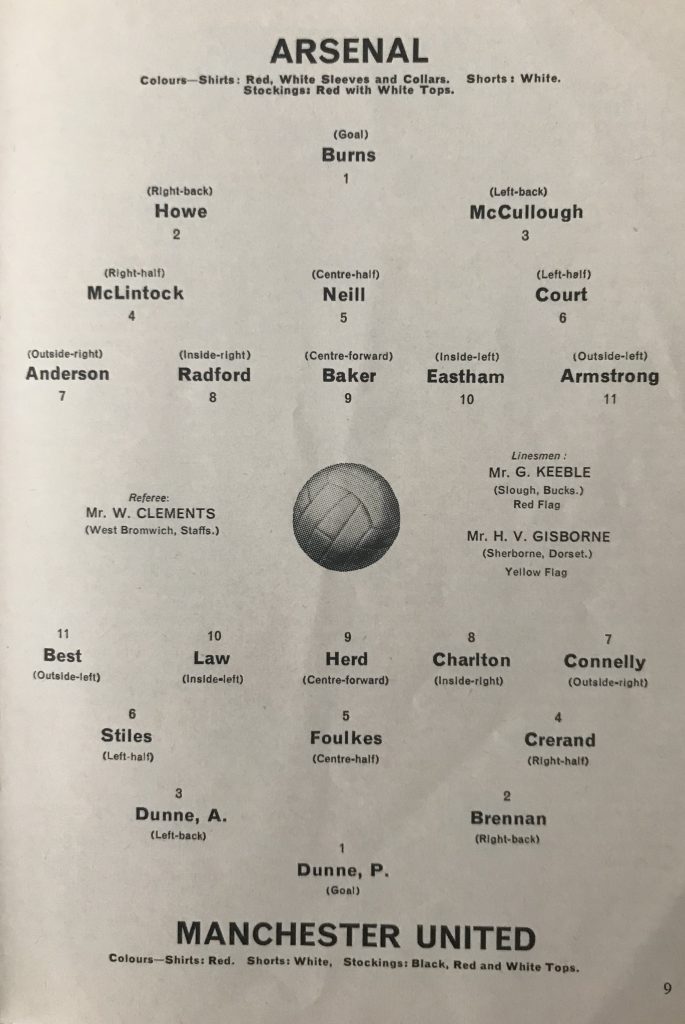
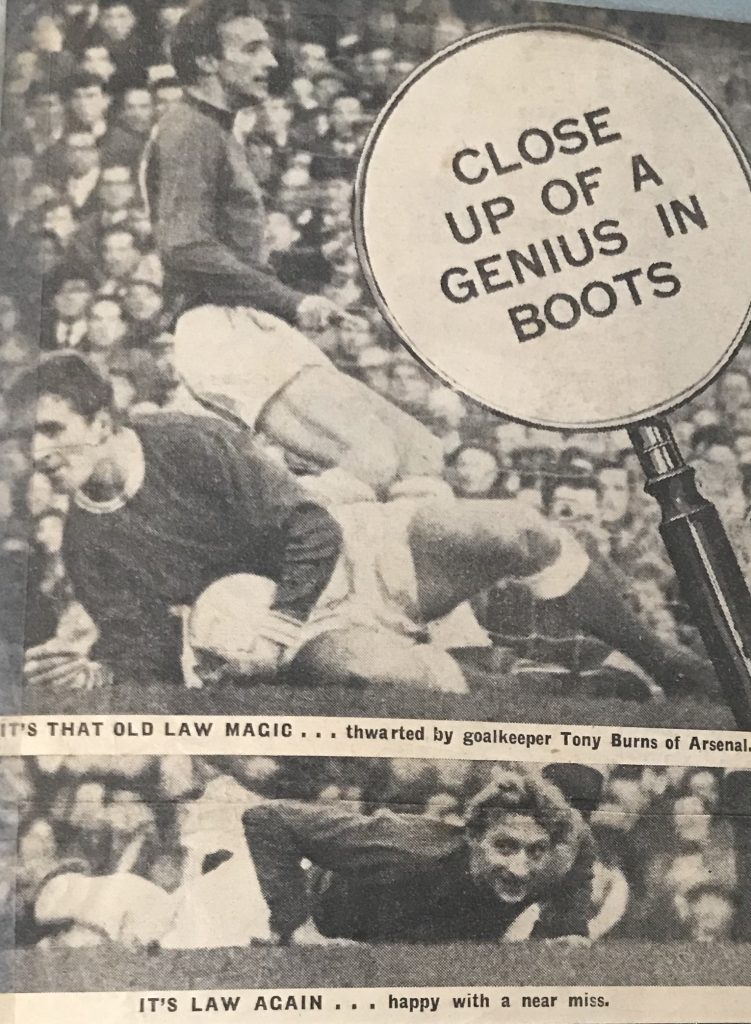
No! To be honest, the most frightening was Denis Law. He was really nasty to play. They said to be careful of him, cause in those days, you could get away with anything. I remember the first corner of the game, and – bearing in mind I’m 19 at this point, and slim as anything – he stood on the near post and smashed me in the face with his head. I couldn’t see the ball as it was coming over, I had tears in my eyes. From then on, it was unbelievable, he just kept laughing at me. Near the end, he put his studs down the side of my cheek. But after the game, he took my hand, and said “well done for putting up with it!” I said thanks very much, and that was the start of my big football career! There were a few physical players around… Jack Charlton at Leeds, Billy Bremner… Blimey, I’m bringing back a few memories myself, here!
You’ve played in all four of England’s top divisions. What was the biggest change as you moved through the leagues?
The way you were treated. Especially as a goalkeeper. What you learn as a ‘keeper, you want a decent ball to play and train with. Over the years, I never used to wear gloves in goal, when I first started. The balls changed, things got better, definitely, you wouldn’t believe it now. They get whatever they ask for nowadays, anything to get a result.

In terms of people that are coming through youth academies, or are starting to get into football as a profession nowadays, do you have any bits of advice? What would you say makes a successful football player?
For me, it’s always been the attitude. You want them to be a decent person, really. I mean, a London boy at 15 is different to a country boy at 15! I always remember when Kenny Sansom made his debut for Crystal Palace, he was 17 or 18. Left-back for England and [later on] Arsenal. I was 36, 37 then. He wanted the ball, and he said, “Here, gimme the ball, son!” to me! I was nearly 37, and he was 18! So, I rolled him the ball, and said, “I don’t think so! Try ‘Sir’”. He was a good lad; a typical, confident, great player.
So, attitude; be a half-decent person, that’s the big thing I used to look for, especially in the ’keepers; and someone who’s really hungry… I used to offer people training in the afternoons, and if someone said no, it really put me off them. I wanted someone that wanted to train all the time. It’s a big thing. And, for a ’keeper, you gotta be brave.
Would you say there were any downsides at all to having football be everything in your life and your career?
I don’t really know how to answer that.
MARION [Tony’s wife]: I can answer that! It’s not nice for families! They’re not around Easter, Christmas… that’s when they’re playing and training. Season starts when the kids are on holiday!
I don’t know, really. You get so used to winning and losing; you’ve got to constantly try and be at *that* level, or your form dips. I think that attitude prolonged my career.
Do you watch much football?
Yeah, I watch the Premier League a lot.
Are there any goalkeepers now who play in a similar style to how you did?
No, I think the game is so different. We could pick the ball up from a back-pass, you know. Nowadays, everything has to be dealt with by the feet. When I coached them, it was all about the feet for half an hour, receiving balls and things like that. It was completely different. There’s a few I really like; I fancy the boy who’s just gone to Sheffield United, [Aaron] Ramsdale. I think he’s gonna be an England ’keeper. He’ll bypass Pickford. Definitely one for the future.
Embed from Getty ImagesWhat is it about his game that you really like?
If you watch him, there’s something about him that makes you want to keep watching. I’m always looking, what’s he doing when the ball’s up the other end, you know? I really wanna go and see him live, there’s something about him. He’s a winner. A real winner. He wasn’t flustered. Playing at Bournemouth; 12,000 people that stadium holds, right? I mean, half those people are on holiday down there! So, there’s no pressure really. But when they go to big clubs, and you see him performing there, I think he really is one for the future.
How would you say you used to play? There are so many styles of goalkeeping in the modern game; for example, the sweeper-keeper technique, like Manuel Neuer…
Yeah, we never used to play like that. Never. We never ever came out the box. I’ll tell you what, I felt better playing when I was 32 than I did at 18. I shouldn’t have been playing in the Arsenal first team at 19; there was so much pressure on me then. It was when I got to 32 that I could handle it, I could handle injuries, I could smash someone in the face as well! You learn all that, and it’s now that I look back and think perhaps, I wasn’t too bad either! I was lively, and I could tell you some decent stories, but my wife’s here!
Being a manager changed it all as well. Managing Tonbridge, that was different. But, no, truly, I’ve enjoyed it all.
Were there any particular successes that you could pinpoint?
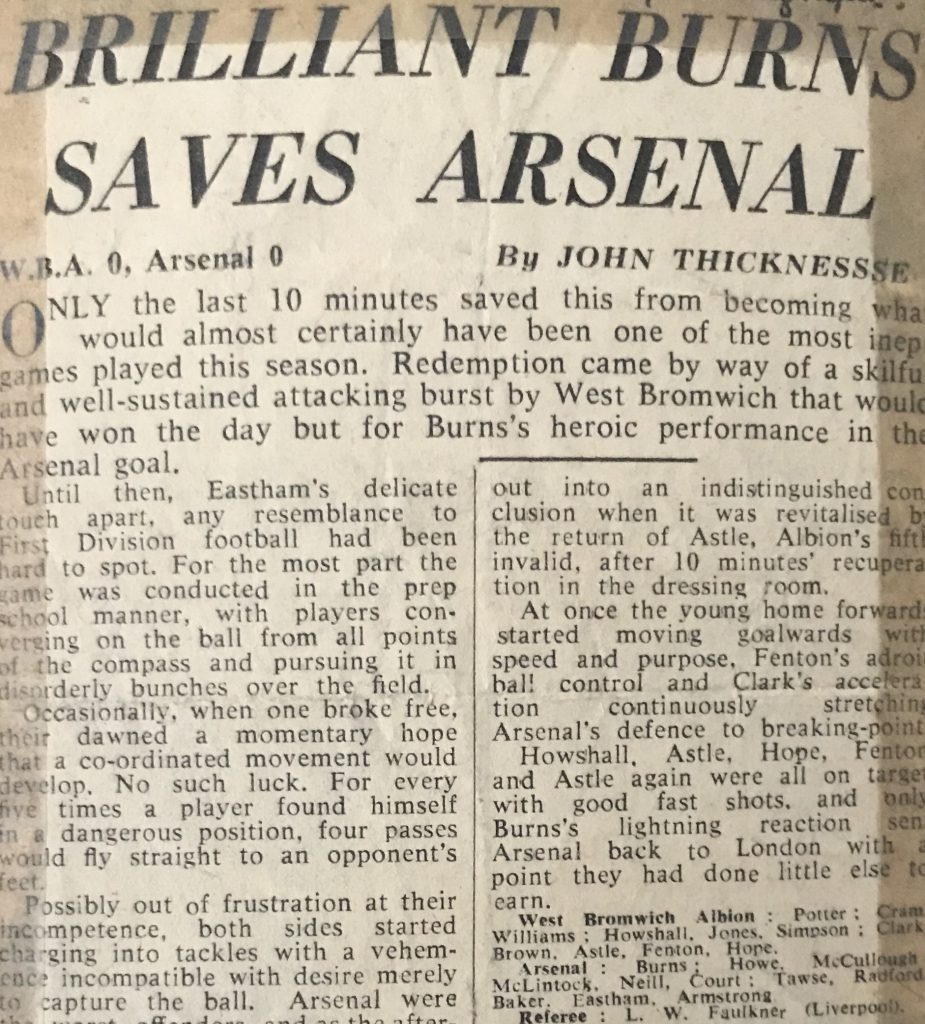
Couple of promotions with Palace, coming up to the Championship when Terry Venables was there. I played well then. South Africa, really. I mean, that lifted my career. Coming from Charlton, you know, it changed everything. Working every day, training every night. At the end of my three-year deal there, I came back and had 160 games for three clubs back here. It could have gone so differently, with my feet up at the beach like the others. It was definitely a good move going out there.
Do you think it’s a good idea for footballers to try the sport in other countries? It’s so different, and you’re just starting to see it nowadays, like Jadon Sancho, Jude Bellingham…
It’s a different kind of style. It really makes them grow up. They’re away from home, it’s a really great idea. You’ve just got to be playing football. If someone’s struggling, like the goalkeeper who’s gone from Sheffield back to Man United, Dean Henderson; if he hadn’t come out of his comfort zone and gone to Sheffield in the Championship, and he’d just sat at Man United, he would’ve wasted three years of his career!
You’ve got to take a chance every now again. My father died when I was young, I never had any advice. I just made all the decisions. Some were wrong, but some were right. It’s been a great experience.
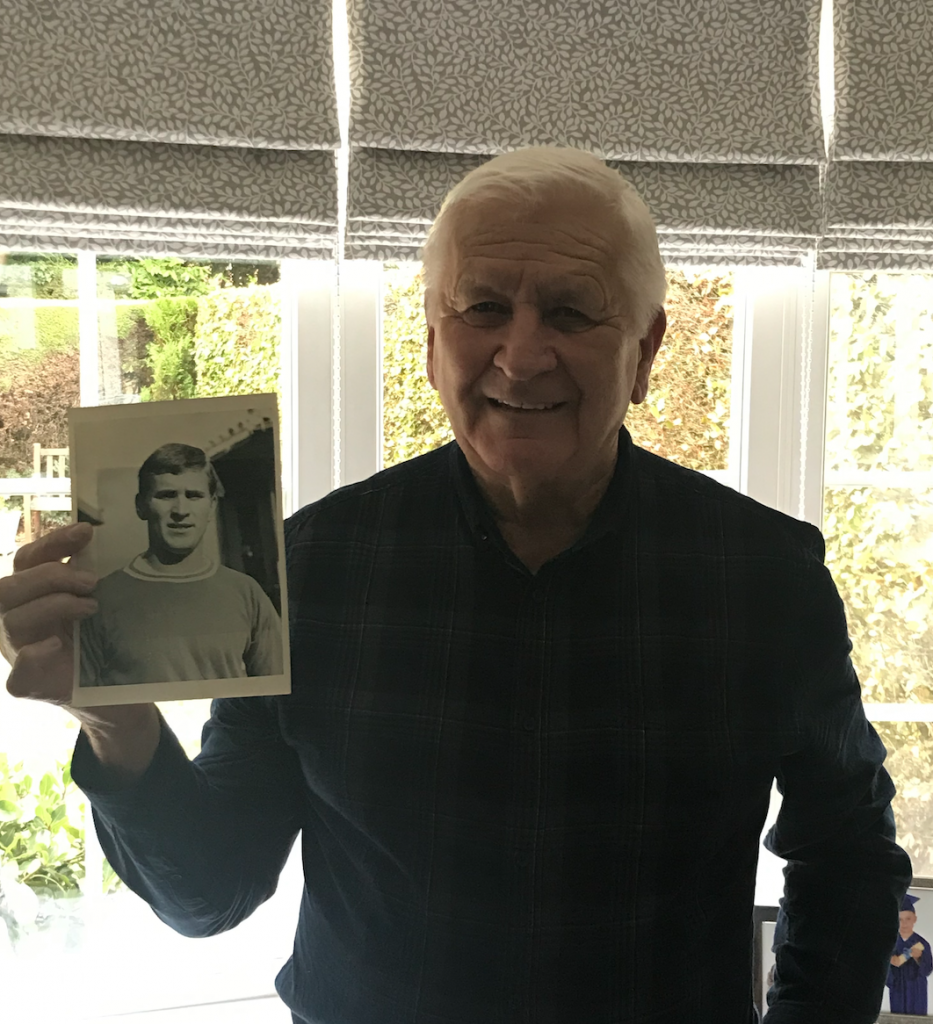
Thank you so much to Tony for sharing such an interesting and unique career! It was an unbelievable experience, and both he and his wife Marion were so accommodating and helpful to me. I wish both of them all the best.
Written by Jed Vine


Nice interview with Tony Burns.I played a few games with him at Durban United here in South Africa.I had wandered where he was but this interview has cleared things up.
If you have his contact details please pass on my good wishes to him.
Arthur Talbot
Ex Durban United Fc
South Africa
Hi. Just seen this excellent interview. Burns is one of my favourite keepers at Palace and we have had some greats. Brilliant during 76/77 promotion season, but the one thing sticks in my kind is from 30/11/1974 when I was 10 years old. A phenomenal point blank save v Charlton at Selhurst Park in a 2-1 win. I have never forgotten it to this day. I wonder if he’ll ever know he still has a big fan of his from the Palace days?
Michael, that save has been shown on The Big Match. It was certainly a bit special.
I met Tony when working at Hove. We shared the same accommodation & had a few beers together. Great person to be with, so friendly & personable. Would be great to meet him again!